8–12%
Rising biomass disposal costs
This is how much disposal costs rise on average every year. Green waste, sewage sludge and wood biomass end up in landfills or are burned without energy recovery.

Our plants turn any biomass and biowaste, even digestate with up to 80% moisture, into heat, biochar and CO₂ certificates. We guide you from the grant application, through commissioning, to selling the biochar and certificates. The G2 Next Gen technology is patented in the USA.
Want to buy biochar? Go to trading →
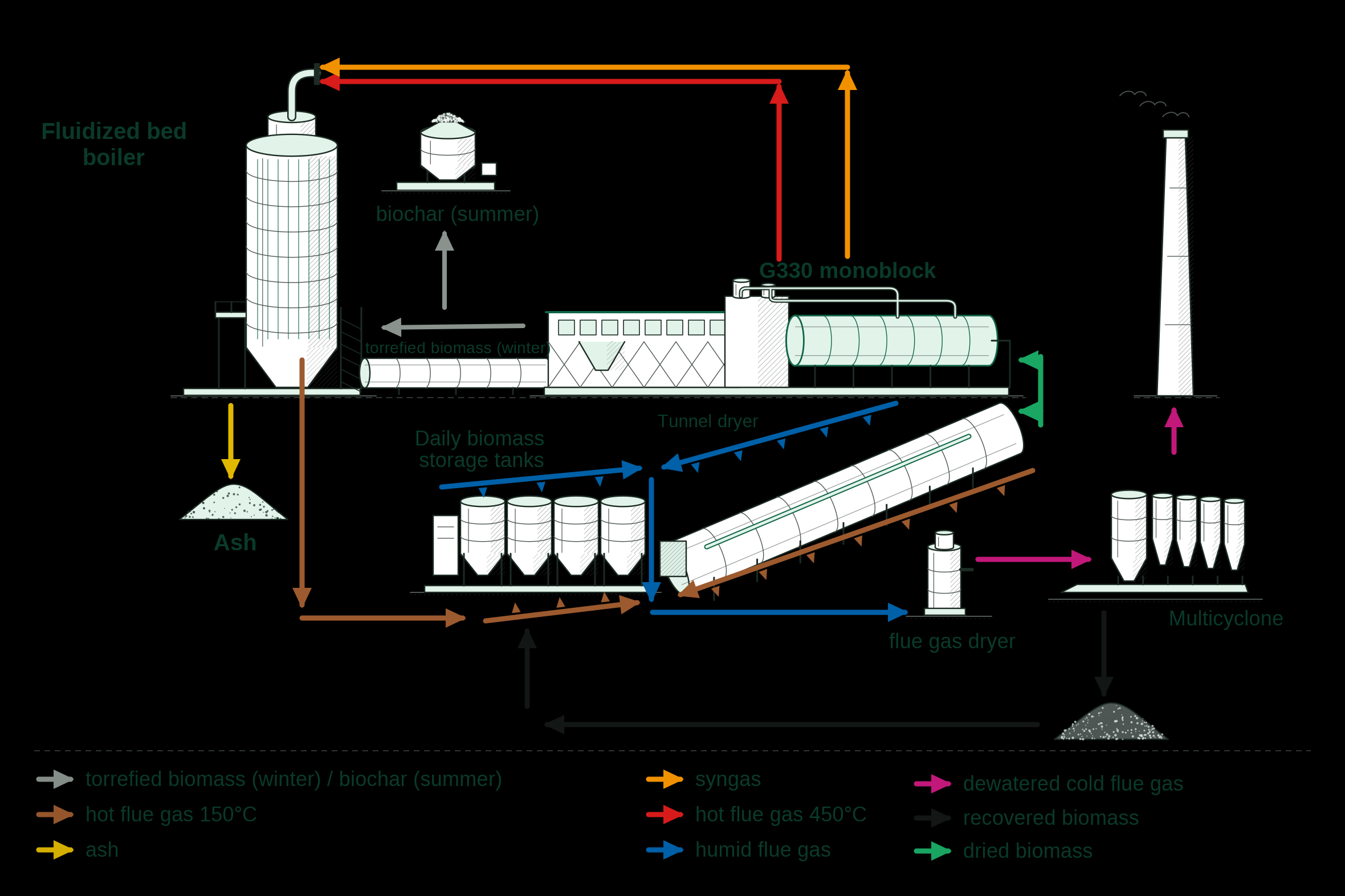
Figures for the plant G2 Next Gen 330.
The challenge
Municipalities, industry and agriculture face rising waste disposal costs, energy dependence and climate pressure.
This is how much disposal costs rise on average every year. Green waste, sewage sludge and wood biomass end up in landfills or are burned without energy recovery.
This is how much the cost of thermal energy has risen over 3 years. Local energy production from biomass is a real alternative.
This emission reduction is required by 2030. Companies without a decarbonization strategy lose access to financing and public contracts.
There is a technology that solves all three problems at once.
Discover the G2 Next Gen technologyTransformation
The waste you pay to dispose of turns into energy, a product and certificates.
Input
Wood chips, straw, manure, poultry litter, sewage sludge, green waste and municipal biowaste
Process
Carbonization in retorts in an oxygen-free atmosphere, 220–450°C
Value 1
Your own heat for the grid or processes
Value 2
A marketable product with EBC certification
Value 3
Certificates for permanent CO₂ removal, bought by companies
Three value streams
Instead of paying for waste disposal — you earn from energy, a product and certificates.
Primary value
Local thermal energy from your own biomass resources. Independence from external suppliers and stable operating costs.
Secondary value
A product with many uses – from agriculture to construction. A marketable commodity with growing market demand.
Additional value
CO₂ sequestration generates marketable carbon credits. Additional revenue without affecting your core business.
Portfolio
Choose the scale that matches your amount of biomass and heat demand.
G2 Next Gen · Flagship system
Year-round energy from biomass waste. Two operating modes: heat in winter, biochar in summer.
G2 Next Gen · Industrial
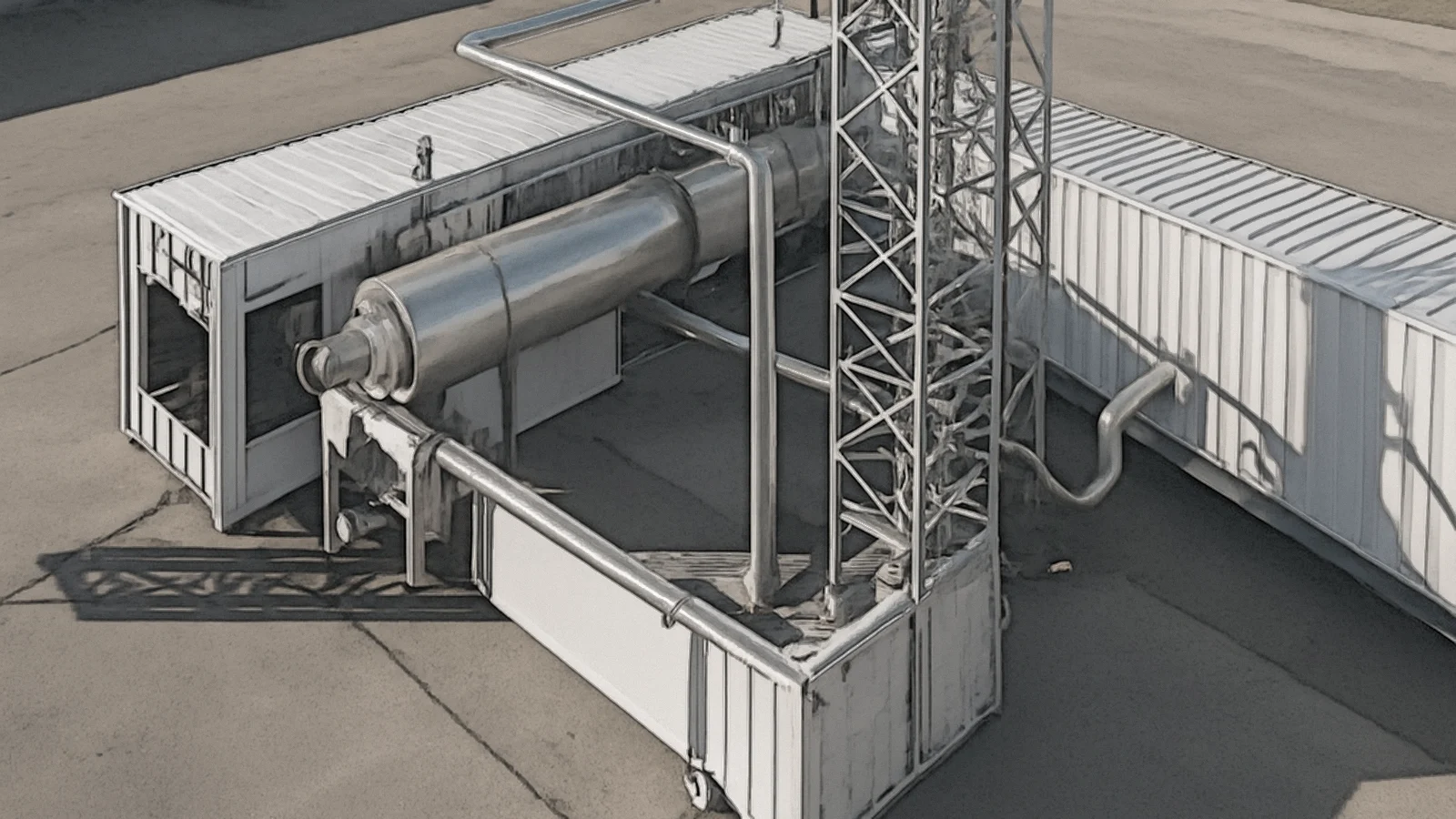
The largest standard plant. Full heat integration for municipalities, industry, biogas plants and waste operators.
G2 Next Gen · Containerized
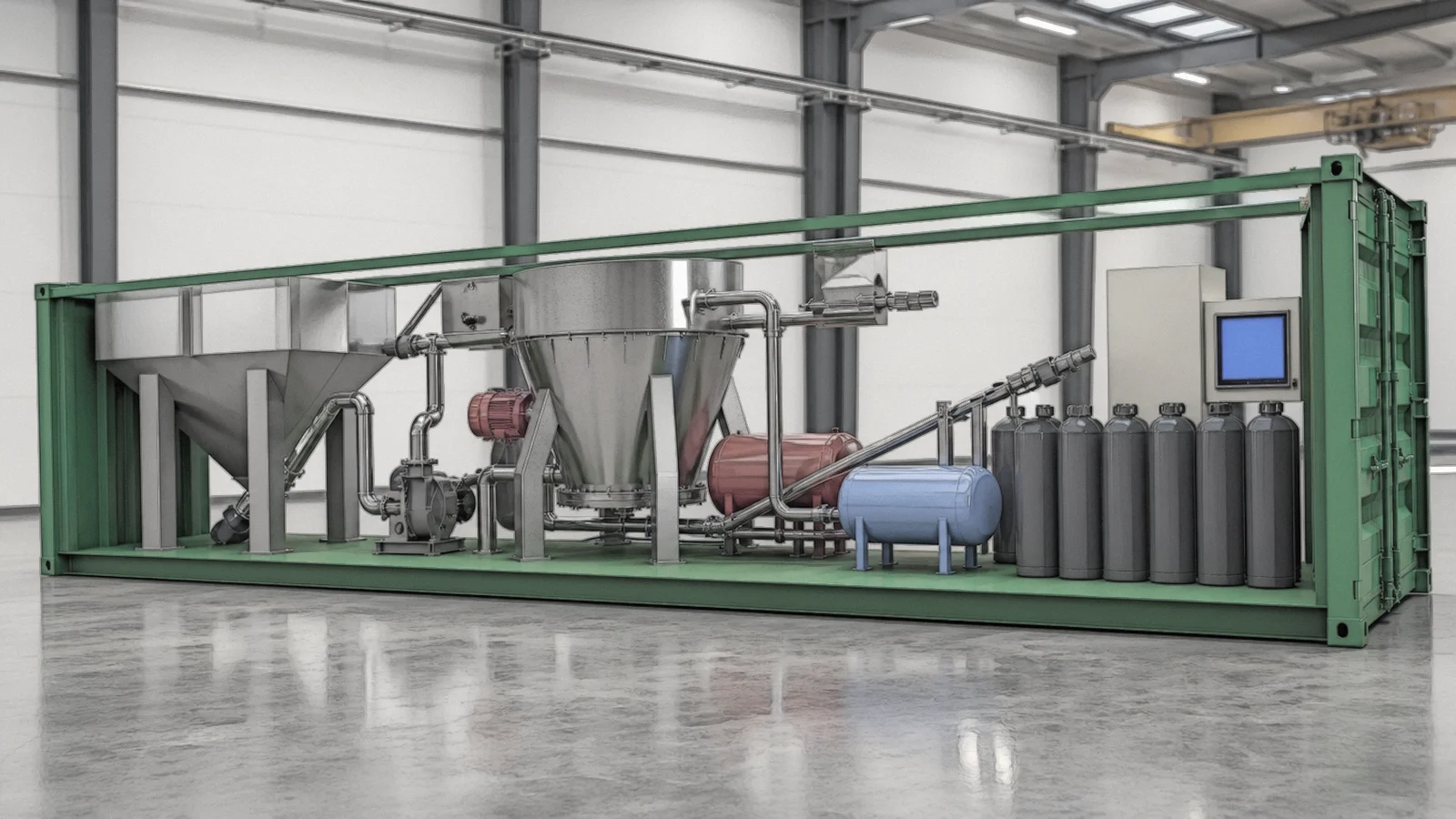
A containerized carbonization system with patented technology. Autothermal process — no external energy required.
GR series · Compact
Four sizes of one proven technology. From micro-plants to medium-sized municipal systems.
Retail product · EBC certified
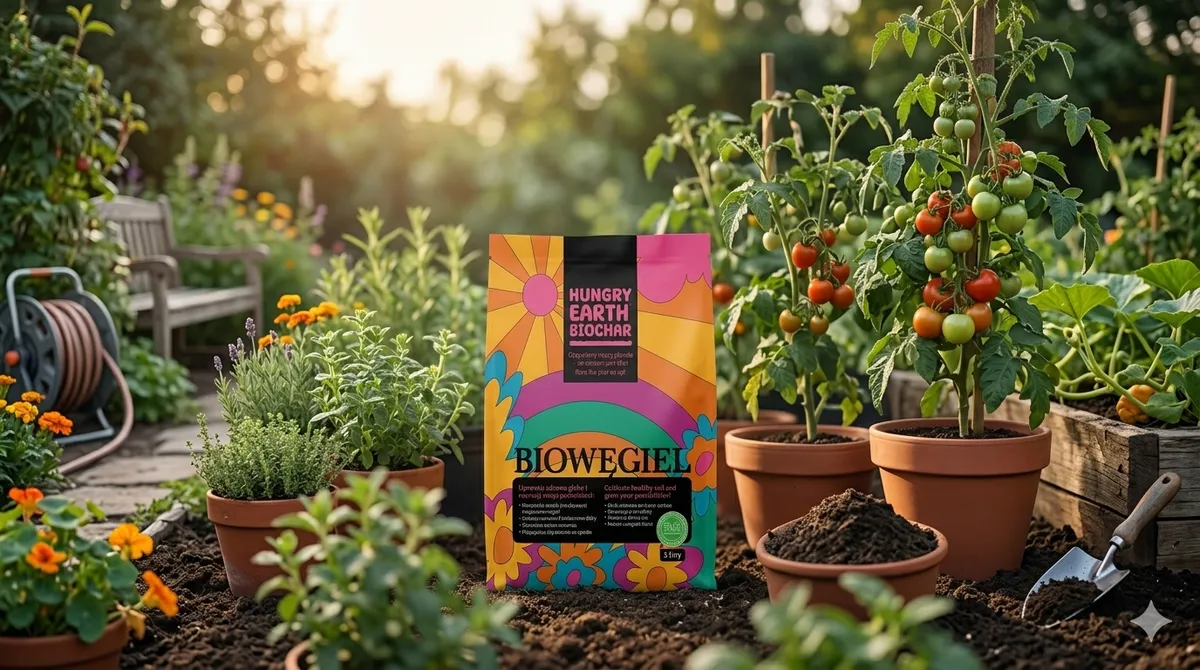
A natural soil improver that retains water and feeds microorganisms. For gardens, shops and distributors.
Industrial applications
Find out which solution suits you.
Book a meeting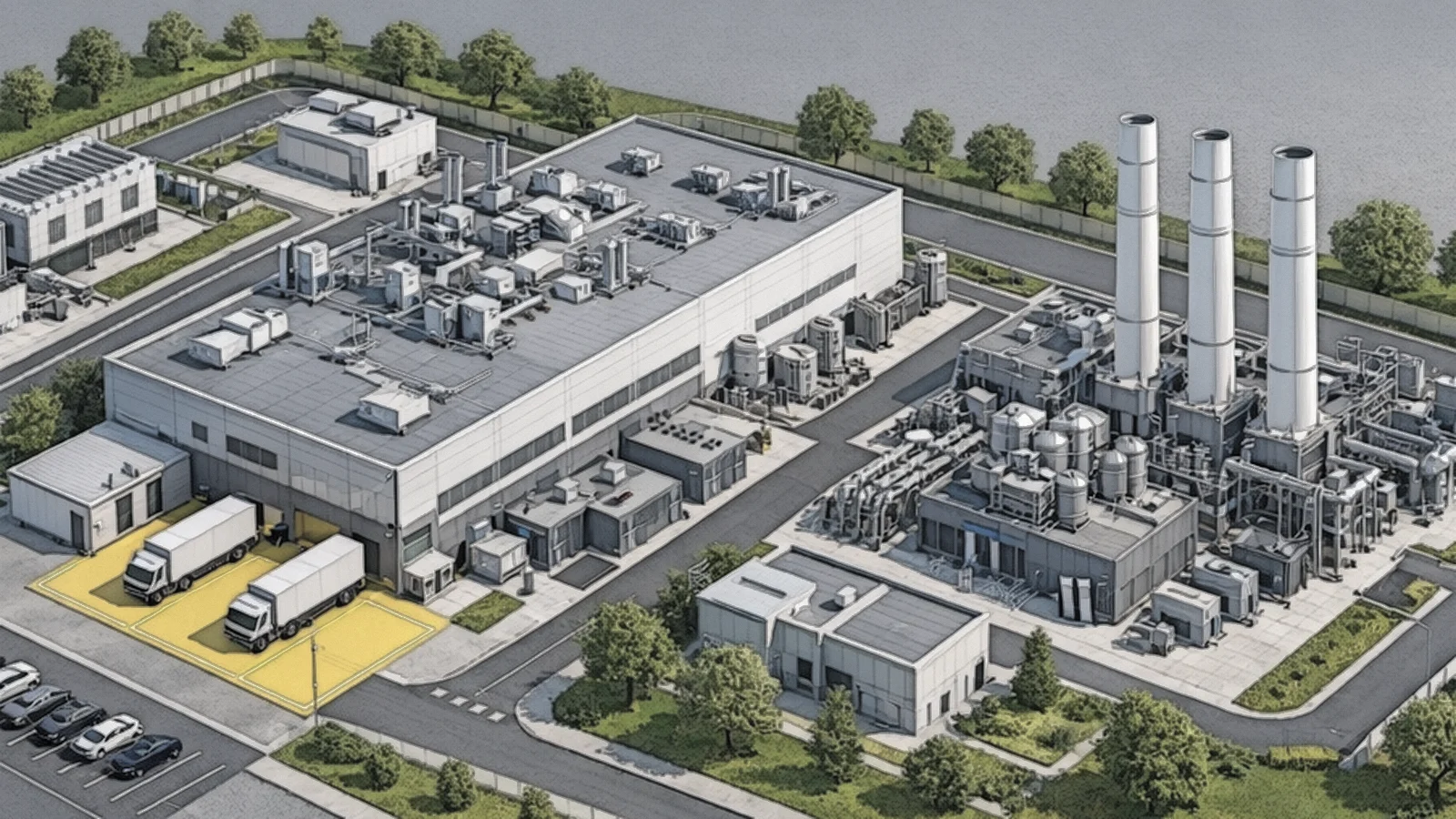
Certified technology
G2 Next Gen reactors with a US patent are proven in continuous 24/7 operation and designed for demanding industrial and municipal environments.
Biochar applications
Biochar is a stable, carbon-rich material. Its properties depend on the type of biomass, the carbonization temperature and the efficiency of the plant.
Soil improver – 5× higher water retention, better soil structure and microbiology.
Additive for concrete and plasters – insulation, moisture regulation, weight reduction.
A natural filter medium – removes pollutants and heavy metals.
Raw material for activated carbon production, reducing agent in metallurgy.
Premium substrate for ornamental and vegetable crops – healthy plants, less watering. Garden biochar →
Regeneration of degraded soils, post-mining and post-industrial land.
Want to buy or sell biochar? Biochar trading →
How we work
We advise you at every stage of our cooperation – from choosing the reactor, through installation, to optimizing the production process.
We get to know your biomass, location and goals: savings on disposal, your own heat, biochar or CO₂ certificates.
Feasibility analysis and financial model of the plant — free of charge.
We propose a model from GR50 to G330 with a boiler and help you prepare the grant application.
G2 Next Gen 100 container units in 3–4 months, larger plants in 6–9 months. Manufacturer's warranty and service.
We help you obtain EBC certification and CO₂ sequestration certificates.
We buy back the production on contract terms and broker the trade in carbon certificates.
Grants
A biochar production plant is an investment in renewable energy and climate protection. We help you check whether you can get funding for it and prepare the application.
Step 1
At the meeting we check which grant programmes your company, municipality or farm can use.
Step 2
We prepare a feasibility analysis and financial model of the plant free of charge and provide the technical data needed for the application.
Step 3
We help you prepare the grant application, so you don't have to translate technical data into the language of the forms yourself.
Check whether your plant can get funding.
Knowledge centre
29.09.2026
Commission document C(2026) 553 final sets out the requirements for monitoring biochar.
Read in Articles →24.09.2026
A study in the canton of Aargau: industrial biochar with EBC certification met the requirements for fertilizers, while material from small plants was sometimes contaminated.
Read in Articles →13.09.2026
Delegated Regulation (EU) 2026/285 covers, among others, DACCS, BioCCS and Biochar Carbon Removal.
Read in Articles →Frequently asked questions
Biochar is a stable, carbon-rich material produced by carbonizing biomass in retorts, in an oxygen-free atmosphere, at 220–450°C. The carbon content depends on the type of biomass, the carbonization temperature and the efficiency of the plant. Biochar locks up CO₂ for more than 100 years. Biochar Europe produces biochar in G2 Next Gen reactors with EBC certification (European Biochar Certificate).
G2 Next Gen reactors process a wide range of biomass feedstocks: wood chips, plant biomass, straw and crop residues, manure and poultry litter, sewage sludge, green waste from gardens and parks, and municipal biowaste (may contain up to 3% plastic). The permitted moisture and particle size depend on the model. G2 Next Gen 100: moisture up to 40%, particles 5–50 mm. G2 Next Gen 330: moisture below 55%, particles approx. 10 mm, and with an additional add-on unit – up to 50 mm. We accept wet biomass, e.g. sewage sludge, even with moisture up to 80% – in that case we design the plant so that it dries the biomass itself before it enters the reactor. For sewage sludge we select G2 Next Gen plants, because the GR series is too small for it.
The G2 Next Gen 330 plant generates up to 10,720 MWh of thermal energy per year at a thermal output of 1.34 MW. The flagship system with a fluidized bed boiler reaches up to ~6 MW, which covers the heat demand of a housing estate or an industrial plant.
Carbon certificates (carbon credits) are marketable instruments confirming the permanent sequestration of CO₂ in biochar. The G2 Next Gen 330 plant sequesters up to 6,600 tonnes of CO₂ per year. The certificates are sold on the VCM (Voluntary Carbon Market) or as CORCs (CO₂ Removal Certificates), generating an additional revenue stream.
Biochar Europe plants are designed for: municipalities and local authorities (sewage sludge disposal, heat for the district heating network), industry (decarbonization, own energy), agriculture (biochar as a soil improver) and owners of surplus wood biomass. Every plant is scalable — from compact GR50 to industrial G330.
The payback period is up to 5 years. It can be shorter – it depends on the type of biomass, the intended use of the biochar and how efficiently you use the energy. A G2 Next Gen plant generates value from three sources at once: thermal energy (heating costs reduced by up to 40%), sales of premium biochar (up to 2,640 tonnes/year) and CO₂ carbon certificates. In addition, it eliminates the cost of disposing of biomass waste, reducing the waste mass by 90%.
We price each plant individually, after examining your biomass. The price depends, among other things, on the type of biomass, how you want to use the heat from the plant, exchange rates and steel prices. We prepare the analysis and financial model free of charge – based on them, you receive a specific offer.
Yes. On request, we will show you an operating plant at one of our customers. Mark this in the form or tell us during the first conversation.
Carbonization is a process in which biomass is heated in retorts in an oxygen-free atmosphere, at 220–450°C. This process retains the carbon in the form of solid biochar. Combustion releases all the carbon into the atmosphere as CO₂. Carbonization in G2 Next Gen reactors generates thermal energy and permanently sequesters CO₂ in the biochar at the same time.
G2 Next Gen reactors have: a US patent, approval of the Polish ministry, BAT compliance (Best Available Techniques under EU law), the EBC certificate (European Biochar Certificate, the European quality and safety certificate for biochar) and compliance with EU directives. A multi-stage flue gas cleaning system ensures full compliance with emission standards.
Questions about lead times, warranty and biochar availability: Contact →
Enquiry or meeting
You don't need to know about biochar. Tick what applies to you and add a few words. We will reply by email, call you or arrange a meeting – whichever you prefer.
Biochar Europe sp. z o.o.
ul. Twarda 44, 00-831 Warszawa
Monday – Friday, 8:00 – 16:00 (CET)